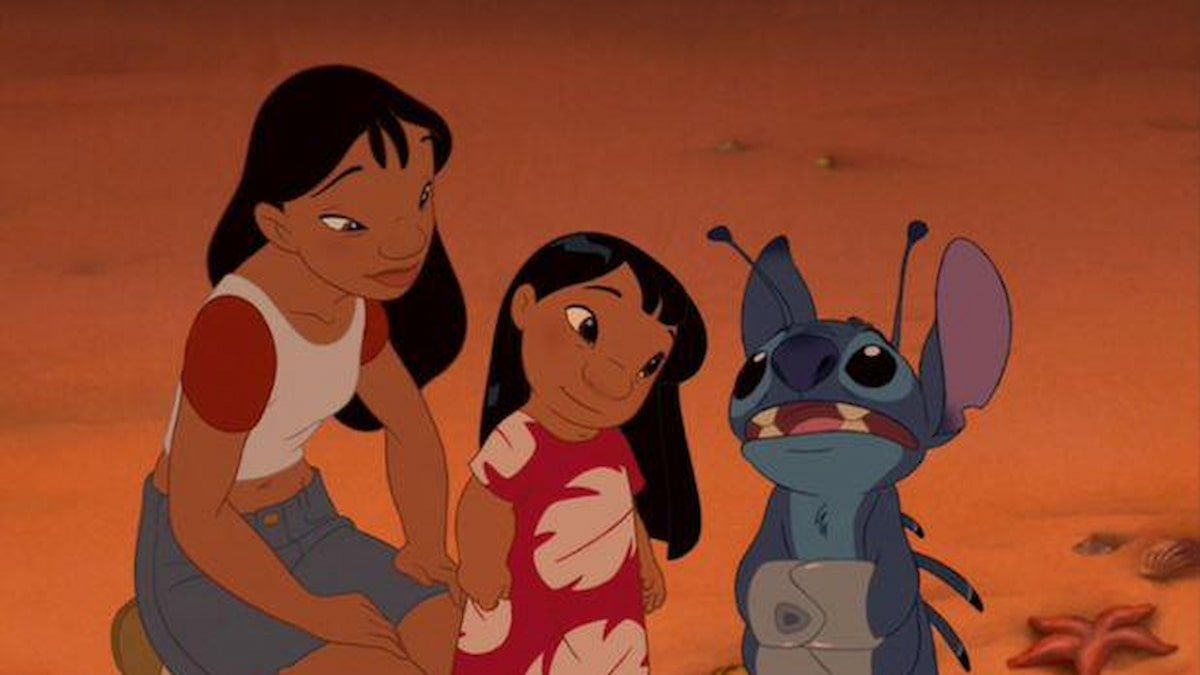
When a beloved animated classic gets the live-action treatment, the internet inevitably erupts with opinions. Few recent remakes, however, have sparked as much passionate debate as Disney's Lilo & Stitch. While box office numbers might look healthy, a deep dive into the Behind-the-Scenes Decisions: Why Lilo's Age Matters reveals a chasm between critical reception and the fury of dedicated fans, ultimately questioning if the remake truly understood the heart of the original.
This isn't just about changing a few plot points; it’s about fundamentally altering the stakes for a central character whose age is inextricably linked to the film's emotional core and its enduring message of "Ohana."
At a Glance: What You Need to Know
- Original's Enduring Message: The 2002 animated Lilo & Stitch centered on "Ohana" (family) and resilience, particularly for Lilo, a young, vulnerable child struggling with grief.
- Remake's Core Changes: The live-action version features significant plot departures, including Nani (Lilo's sister) leaving for university, entrusting Lilo to David and his grandmother, and alterations to key antagonists.
- Fan Backlash: Fans are furious, arguing these changes betray the "Ohana" message, "sanitize" critiques of colonialism and child protective services (CPS), and are "culturally insensitive."
- Critical Divide: Despite fan anger, the remake garnered largely positive critical reviews (7.1 IMDb, 68% Rotten Tomatoes).
- Lilo's Age is Key: The emotional impact and narrative weight of these changes are profoundly different when applied to a very young child like Lilo, making her age a critical factor in fan disappointment.
The Original Magic: Ohana, Empathy, and a Small Girl's World
In the summer of 2002, Disney released Lilo & Stitch, marking its first film set in the vibrant, culturally rich landscape of Hawaii. This wasn't just a picturesque backdrop; it was a carefully chosen setting, extensively researched by directors Chris Sanders and Dean Deblois, who immersed themselves in the islands' culture, music, and language. This dedication ensured authenticity, making the Hawaiian concept of "ohana" – family, and the idea that "nobody gets left behind or forgotten" – the undeniable heart of the film.
At the center of this story was Lilo Pelekai, a spirited, somewhat eccentric young girl coping with immense grief after losing her parents. Lilo’s specific challenges – navigating school bullies, forming unusual friendships, and most critically, relying on her older sister, Nani, as her sole guardian – resonated deeply with audiences. To truly grasp the stakes in her world, it's helpful to Discover Lilos exact age in the original film. Her tender years made her vulnerability palpable and underscored the fierce, protective love Nani held for her, despite their own struggles.
Stitch, the chaotic "Experiment 626" engineered by a mad scientist, was originally conceived by animator Chris Sanders in the 1990s. Designed as an anti-hero inspired by Gremlins, Stitch embodied unpredictability, his large eyes and multiple arms hinting at both mischief and an underlying need for belonging. His crash-landing in Hawaii provided the perfect foil for Lilo's loneliness, as two outsiders found solace and family in each other. The film’s return to traditional animation, with its unique watercolor backgrounds, gave it a soft, timeless feel that further enhanced its emotional depth.
Crafting Chaos: How Stitch and Hawaii Shaped the Story
The creation of Lilo & Stitch was a testament to creative ingenuity under budget constraints. Chris Sanders developed Stitch's concept, even crafting a physical model from crab parts, clay, and glass taxidermy eyes, to bring the "anti-hero" to life. This meticulous attention to detail extended to the film's setting. Sanders' choice of Hawaii, sparked by a map on his wall, led to extensive research trips. These immersions shaped everything from the visual aesthetics – like incorporating the pink hue of ocean foam at sunset – to the film's narrative backbone.
The Hawaiian concept of "ohana" wasn't merely a catchphrase; it was woven into the very fabric of the story, giving emotional weight to Lilo and Nani’s struggle to stay together. Music, too, drew from Hawaiian generational tunes, with actress Tia Carrere (the voice of Nani and of Hawaiian origin) influencing the inclusion of "Aloha Oe"—a poignant Hawaiian song of love and farewell by Queen Lili’uokalani—in a pivotal scene. Her grandmother even harmonized for authenticity, a small but powerful detail highlighting the commitment to cultural accuracy. These behind-the-scenes choices weren't just stylistic; they were foundational, ensuring the film's message of belonging, especially for a child like Lilo, felt earned and authentic.
The Live-Action Remake: A New Brush, A Different Canvas
Disney's live-action remake of Lilo & Stitch landed with a significant worldwide box office debut of $341 million, and it has garnered largely positive critical reviews, holding a 7.1 rating on IMDb and 68% on Rotten Tomatoes. By many metrics, it seems like a success.
However, behind these numbers lies a starkly different narrative from the film's most ardent fans. The remake has drawn significant fan criticism for major departures from the original animated film, which viewers claim alter its core story and message. This isn't just nitpicking about minor details; it's a deep-seated frustration that suggests a fundamental misunderstanding of what made the original so beloved.
Why Every Year Counts: Lilo's Age and the Remake's Core Changes
This is where Lilo's age becomes not just a detail, but a linchpin in the entire discussion surrounding the remake's controversial changes. In the original, Lilo's tender years—her vulnerability, her dependence, her childlike perspective on loss and belonging—are central to the narrative’s emotional weight. Altering core plot points for a character of such a specific, young age fundamentally changes the story.
Let's break down the key changes and their profound impact through the lens of Lilo's age:
Change 1: Nani's Departure & Lilo's New Guardianship
- Original: A cornerstone of the animated film is the unwavering bond between Lilo and Nani. Despite their financial struggles and Nani's youth, the core message of "Ohana means family, and family means nobody gets left behind or forgotten" is exemplified by their fierce determination to stay together. Nani's fight to keep Lilo is the primary emotional driver.
- Remake: In a major departure, the live-action remake sees Nani leave to pursue marine biology at university, leaving Lilo to live with David and his grandmother. While Stitch stays with Lilo, the primary family unit is fractured.
- Impact on Lilo (and her age): Imagine a six-year-old (Lilo's approximate age in the original) losing her parents, then facing the very real threat of separation from her only remaining family, her teenage sister Nani. The desperation and fear in the original are magnified by Lilo's youth and utter dependence. Her world is already unstable, and Nani is her rock.
- The stakes are astronomically higher for a young Lilo. For Nani to willingly leave a child of that age, even for a noble pursuit, drastically undermines the "nobody gets left behind" message. It implies a degree of self-sufficiency or emotional maturity in Lilo that simply isn't present in a child so young. The original showcased Lilo's childlike regression and erratic behavior because she was struggling to cope at such a young age.
- This change fundamentally redefines the concept of "ohana" from an unbreakable bond of mutual support into something more flexible, which, for a vulnerable child, feels like a betrayal of their deepest need for security.
Change 2: The Softening of Conflict (CPS & Colonialism Critique)
- Original: The threat of Child Protective Services (represented by Cobra Bubbles) is a constant, tangible pressure on Nani and Lilo. This isn't just a plot device; it reflects the very real anxieties of vulnerable families and the state's power to intervene. It also, as some fans argue, subtly critiques the paternalistic oversight that can separate native children from their families. The stakes are immense: Lilo could be taken away.
- Remake: Fans argue that the remake "sanitizes the critique of American colonialism" and organizations like CPS. The portrayal of the state separating native children from their families as a "happy ending" (Lilo with David's grandmother) is deemed "culturally insensitive" and a "slap in the face to those it represented."
- Impact on Lilo (and her age): For a young Lilo, the threat of CPS is terrifying and incomprehensible. She doesn't understand the bureaucracy; she only knows she might lose Nani, just as she lost her parents. This external pressure is a critical driver for Lilo's attachment to Stitch—he's a creature she won't be separated from.
- By softening or misrepresenting this conflict, the remake lessens the dramatic tension and, more importantly, the profound fear and anxiety Lilo would experience. Her youth makes her utterly helpless in the face of such institutions, which is why Nani's fierce protection is so vital.
- Presenting the separation of Lilo from Nani as a "happy ending" ignores the traumatic impact such an event would have on a child of Lilo's age, especially in a cultural context where family unity (ohana) is paramount. It shifts the narrative from one of resisting separation to accepting it, which directly conflicts with the original's core message.
Change 3: Villain Shift (Jumba as Antagonist, Gantu Absent)
- Original: Captain Gantu serves as a clear, imposing external antagonist, relentlessly pursuing Stitch. This pursuit provides the action, but also a unifying external threat that solidifies Lilo and Nani's bond with Stitch.
- Remake: Captain Gantu is absent, and Jumba is recast as the main antagonist.
- Impact on Lilo (and her age): While less direct on Lilo's age, the nature of the antagonist shapes the type of danger and the dynamic of protection. A clear, external threat like Gantu necessitates a united front from the "ohana."
- A shift to Jumba as the primary antagonist might internalize the conflict more, potentially reducing the sense of an outside world threatening their fragile family unit. For a young Lilo, a clear "bad guy" like Gantu simplifies the stakes and gives her and Stitch a shared purpose in escaping. Changing this dynamic can subtly alter the feel of shared struggle and the urgency of their family bond.
The "Ohana" Dilemma: Fan Fury vs. Critical Acclaim
The stark contrast between the live-action remake's positive critical reviews and its furious fan reception highlights a fundamental disconnect. Critics might appreciate the film's production values, visual spectacle, or perhaps even a perceived "modernization" of themes. However, for those who grew up with the original, the changes cut too deep.
Fan anger isn't merely nostalgia; it's rooted in the perception that the remake fundamentally misunderstands the soul of Lilo & Stitch. The original's "Ohana" message was never a hollow platitude; it was a hard-won truth forged in the crucible of poverty, grief, and the constant threat of family separation. Lilo's age made these struggles profoundly empathetic.
To alter the story such that Nani leaves Lilo, and Lilo is placed with other guardians, feels like an erasure of the very essence of that message. It's perceived as culturally insensitive because it takes a Hawaiian-centric concept of unbreakable family bonds and presents a scenario of chosen separation as a positive outcome for a child who, by virtue of her age, desperately needs stability and her immediate family. For many, this isn't a fresh take; it's a diminishment of the original's power.
Behind the Decisions: Why Did Disney Change Course?
Understanding why these behind-the-scenes decisions were made requires speculation, but potential motivations often include:
- Broader Audience Appeal: Disney might aim to simplify potentially complex or "darker" themes (like the overt threat of CPS or the critique of state intervention) to create a more universally palatable, less challenging narrative.
- Modernizing Themes: Perhaps there was an attempt to update what some might perceive as dated elements, though in this case, it seems to have backfired by undermining core values.
- Setting Up Sequels/Spin-offs: Altering character arcs (like Nani going to university) could be seen as an attempt to create new narrative avenues for future projects, rather than simply replicating the original.
- Creative License: Directors and writers for remakes often seek to put their own stamp on the material, which can lead to significant departures. The challenge is balancing this creative freedom with respect for the source material's foundational elements.
- Avoiding Controversy (Ironically Creating It): Attempts to avoid portraying potentially uncomfortable societal issues (like the threat of child separation by state entities) might have inadvertently led to greater controversy by trivializing the emotional and cultural impact of those very issues.
Each of these decisions, when filtered through the critical lens of Lilo's young age and her deep need for family, inevitably changes the story's emotional resonance. The remake, despite its good intentions, struggles to justify these alterations without sacrificing the core tenets that made the original a beloved classic.
Reflecting on Storytelling: When Remakes Go Too Far
The Lilo & Stitch live-action remake serves as a potent case study in the delicate art of adaptation. Remakes face the unenviable task of honoring a beloved original while attempting to innovate or appeal to a new generation. When the source material is as culturally sensitive and emotionally profound as Lilo & Stitch, that task becomes exponentially harder.
The unique sensitivity here stems from the original's deep roots in Hawaiian culture, its unwavering commitment to the "ohana" theme, and its empathetic portrayal of a young, grieving child. When behind-the-scenes decisions lead to changes that directly contradict these foundational elements—especially when those changes involve the separation of a very young protagonist from her only remaining family—the story loses its heart.
Lilo's age, her vulnerability, and her specific needs as a child coping with trauma were not incidental details; they were the engine of the original film's emotional impact. By altering her guardianship and the nature of her family's struggle, the remake inadvertently diminished the power of its own narrative and, for many fans, missed the point entirely.
What This Means for Viewers and Future Remakes
For us as viewers, the Lilo & Stitch remake saga is a powerful reminder that not all adaptations are created equal. It encourages us to look beyond box office numbers and critical scores to understand the deeper implications of creative choices, especially when they affect the portrayal of vulnerable characters and significant cultural themes.
For creators embarking on future remakes, the fan backlash to Lilo & Stitch offers a cautionary tale. It emphasizes the importance of understanding the foundational elements that made an original beloved, particularly the specific circumstances and emotional stakes tied to its characters. When a character's age, vulnerability, and cultural context are so central to the narrative, altering those elements risks betraying the very essence of the story. The enduring power of "Ohana means family, and family means nobody gets left behind or forgotten" isn't just a catchy phrase; it's a profound promise, one that the original animated film fiercely upheld for a little girl named Lilo.